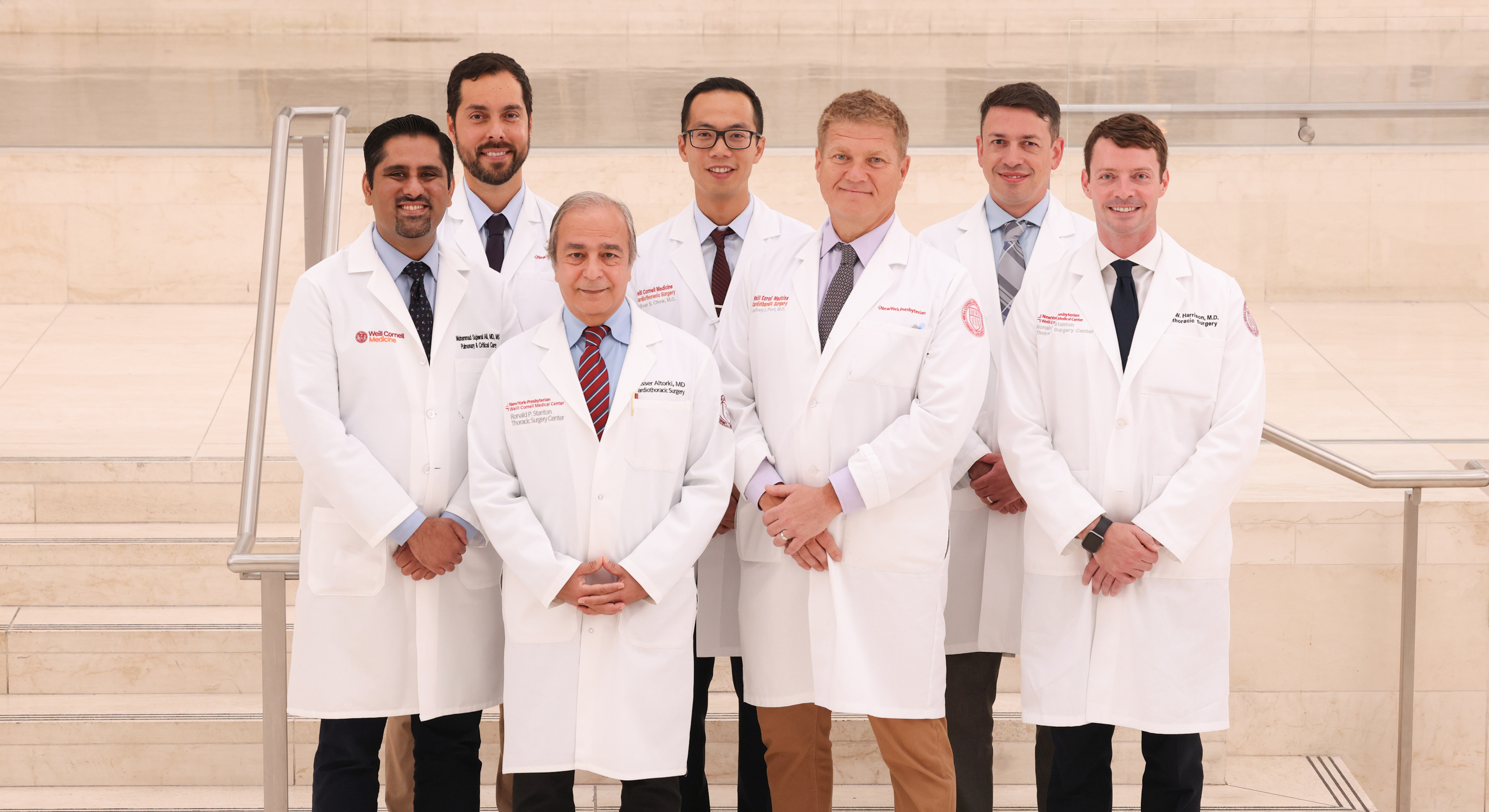
Thoracic Surgery at Weill Cornell Medicine/NewYork-Presbyterian is dedicated to the delivery of the highest quality and advanced care to patients with diseases of the lung, trachea, esophagus, chest wall and mediastinum. Read More.
Weill Cornell Medicine Cardiothoracic Surgery525 East 68th Street Box 110 Suite M 404New York, NY 10065Directions Phone: (212) 746-5166Email: ctsurgery@med.cornell.edu
News
WCM Redefines Lung Cancer Treatment with Streamlined Diagnosis and Surgery
.
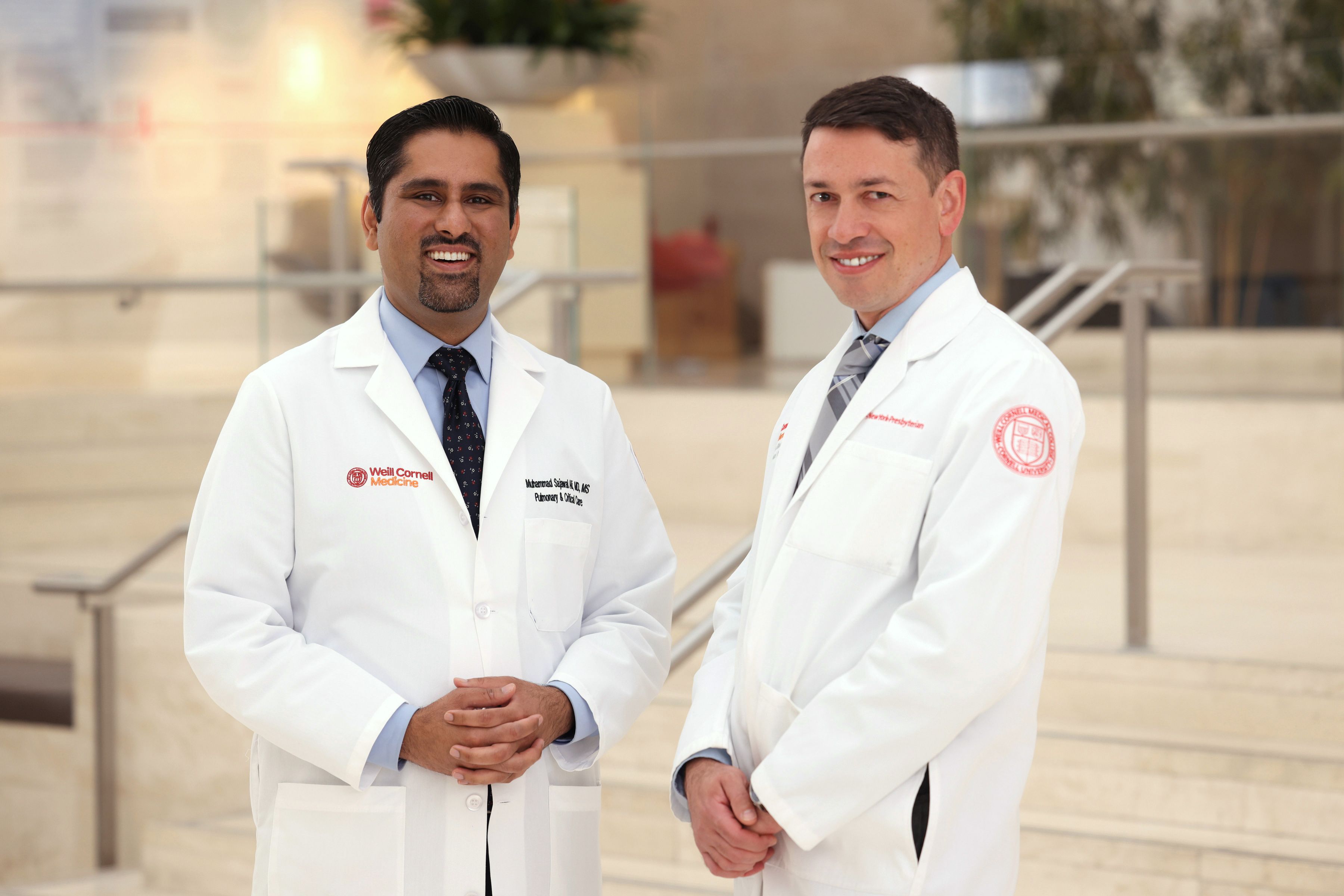
For patients diagnosed with early-stage lung cancer, the journey from detection to treatment has traditionally been a prolonged and intricate process. However, Weill Cornell Medicine has introduced an innovative approach that is streamlining the field of lung cancer care. Led by thoracic surgeon Dr. Jonathan Villena-Vargas and interventional pulmonologist Dr. Eugene Shostak, this innovative technique aims to simplify the diagnosis and surgical treatment of lung tumors, providing patients with a more efficient and effective healthcare experience.
The new combined procedure, offers a comprehensive and integrated approach to lung cancer management. By combining cutting-edge technology, unified anesthetic administration, and seamless diagnostic and surgical capabilities, patients now benefit from a rational pathway that consolidates multiple procedures into a single session.
Patients with stage 1A non-small cell lung cancer (NSCLC) who undergo surgery to remove a small portion of their lung have outcomes comparable to patients who have surgery removing an entire lobe, according to recent study results. Read More
Lung-Sparing Surgery Is Effective for Some with Early-Stage Lung Cancer
When lung cancer is found early, before it has spread beyond the lungs, people usually have surgery to remove the tumor. For more than 25 years, the standard of surgical care for such patients—even those with very small tumors—has been to remove the entire large section, or lobe, of the lung that contains the tumor. This is done to reduce the chances of the cancer coming back.
But some lung surgeons have suggested that certain patients may do just as well or even better with an operation to remove only part of the affected lobe.
Now, results of a large international clinical trial show that, for certain people with early-stage non-small cell lung cancer (NSCLC), surgery to remove a piece of the affected lobe is as effective as surgery to remove the whole lobe.